
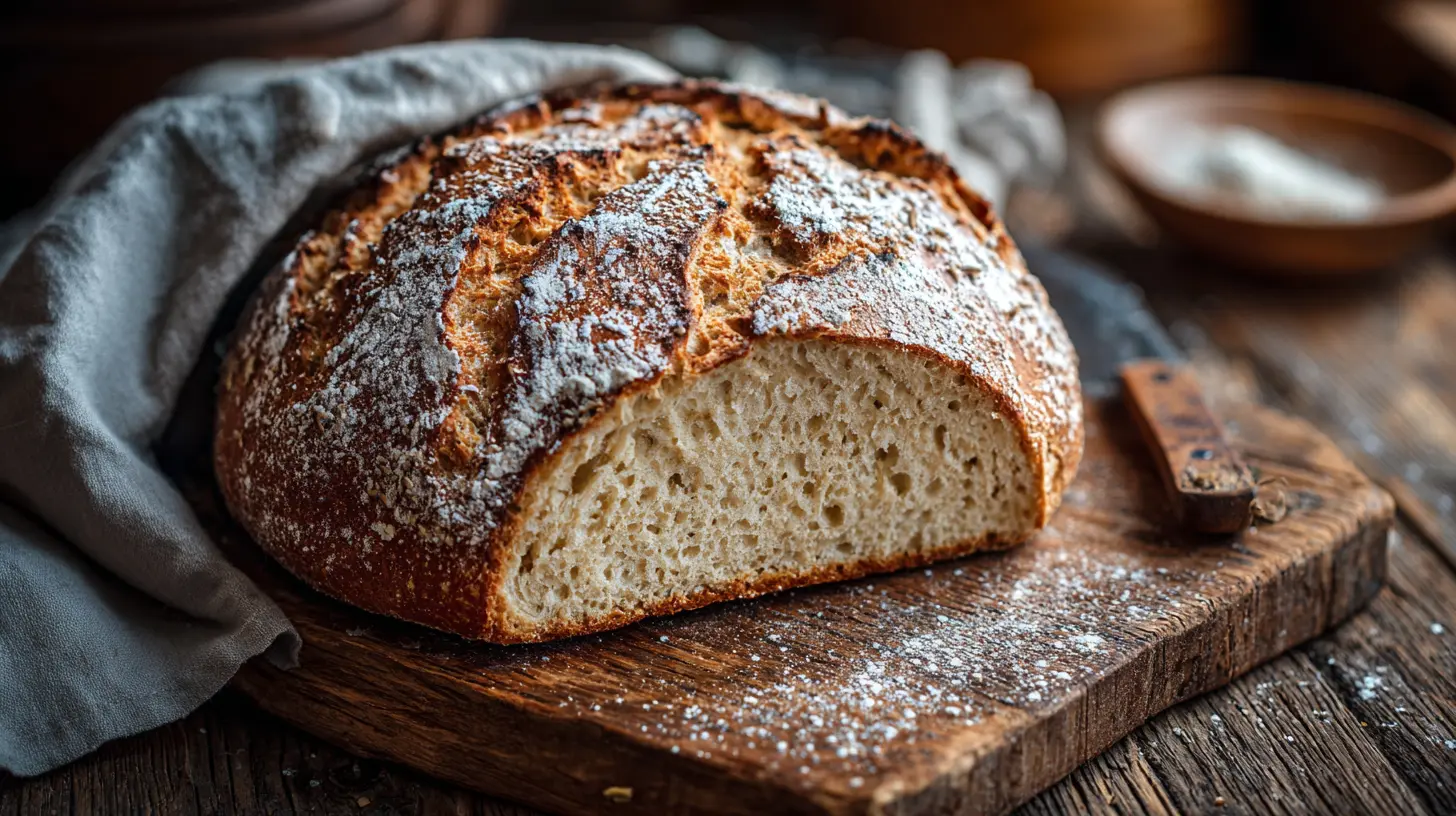
There’s nothing quite as satisfying as slicing into a perfect loaf of homemade gluten free bread that’s soft, fluffy, and never crumbly. This ultimate gluten free bread recipe delivers bakery-quality results with a light, airy crumb and golden crust that will make you forget it’s gluten-free. Developed through 50+ test batches and refined with professional baking techniques, this easy gluten free bread recipe solves the common problems of dense texture, poor rise, and gummy consistency that plague most gluten-free breads. Ready in just over an hour—no special equipment required!
A Note from Chef Peter About This Gluten Free Bread Recipe
After 15 years specializing in gluten-free and allergen-friendly baking, I’ve perfected this homemade gluten free bread recipe to achieve the ideal balance of soft, airy texture and robust structure. The secret lies in the precise combination of psyllium husk and xanthan gum, which mimics gluten’s elasticity without the drawbacks. This best gluten free bread recipe represents my commitment to creating baked goods that are both incredibly satisfying and safe for those with dietary restrictions—every slice delivers the taste and texture of traditional bread without compromise.
For more gluten-free baking expertise and recipe testing insights, visit the Beyond Celiac Foundation for comprehensive gluten-free living resources.
Why You’ll Love This Gluten Free Bread Recipe
This gluten free sandwich bread achieves what most recipes promise but rarely deliver: a soft, flexible crumb that doesn’t crumble when sliced, perfect for sandwiches, toast, or simply enjoying with butter. Unlike store-bought gluten free bread that’s often dry and dense, this homemade version of our gluten free bread recipe stays fresh for days and freezes beautifully.
- Perfect soft texture – No more crumbly or gummy bread
- Easy to make – Simple steps anyone can follow
- Versatile adaptations – Dairy-free, egg-free, and vegan options
- Cost effective – Much cheaper than store-bought options
- Freezer friendly – Stays fresh for months when frozen
Quick Recipe Overview
| Category | Details |
| Prep Time | 20 minutes |
| Rise Time | 45-60 minutes |
| Bake Time | 40-45 minutes |
| Total Time | 1 hour 45 minutes – 2 hours |
| Yield | 1 loaf (12 slices) |
| Difficulty | Intermediate |
| Dietary | Gluten-free, can be dairy-free |
Essential Ingredients for This Gluten Free Bread Recipe
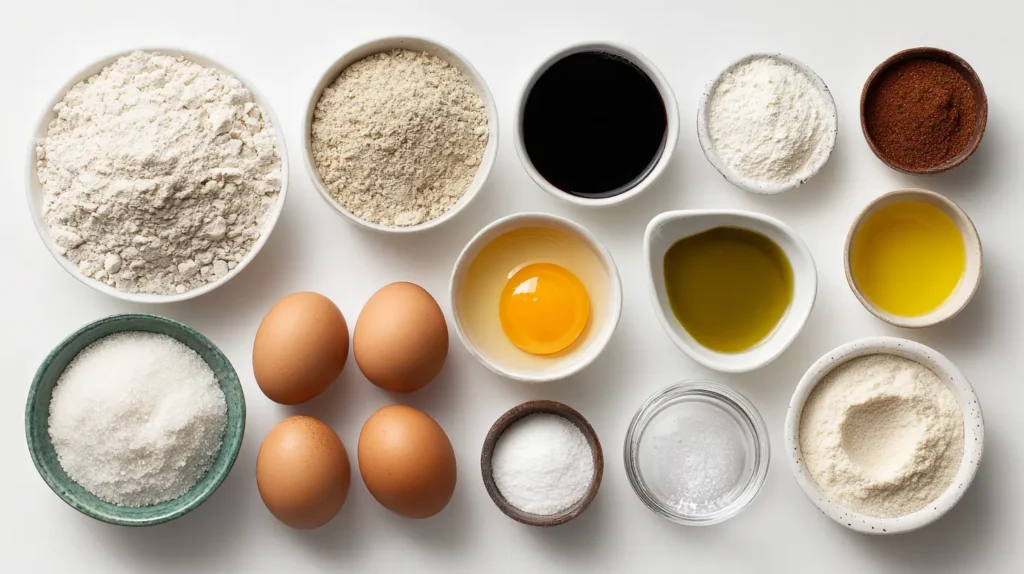
| Ingredient | Quantity | Purpose & Notes |
| Gluten-free all-purpose flour | 3 cups (360g) | Base structure – use quality blend |
| Psyllium husk powder | 2 tbsp (18g) | Moisture retention & elasticity |
| Xanthan gum | 1 tsp (3g) | Binding agent for proper rise |
| Active dry yeast | 1 tbsp (9g) | Leavening – must be fresh |
| Granulated sugar | 2 tbsp (25g) | Yeast food & browning |
| Fine sea salt | 1½ tsp (9g) | Flavor enhancement |
| Large eggs (room temp) | 3 | Structure & richness |
| Warm water (110°F) | 1¾ cups (415ml) | Yeast activation & hydration |
| Olive oil | ¼ cup (60ml) | Moisture & soft crumb |
| Apple cider vinegar | 1 tbsp (15ml) | Tenderizing & improved rise |
Required Equipment
- 9×5 inch loaf pan
- Stand mixer with paddle attachment (or hand mixer)
- Digital kitchen scale (highly recommended)
- Instant-read thermometer
- Mixing bowls (various sizes)
- Measuring cups and spoons
- Plastic wrap or clean kitchen towel
- Wire cooling rack
- Rubber spatula
Step-by-Step Instructions for This Gluten Free Bread Recipe
Step 1: Prepare Pan and Activate Yeast
Grease a 9×5 inch loaf pan thoroughly with olive oil or line with parchment paper. In a small bowl, combine 1¾ cups warm water (110°F/43°C), 2 tablespoons sugar, and 1 tablespoon active dry yeast. Let sit for 5-10 minutes until foamy and activated.
Chef Peter’s Note: “The water temperature is crucial in this gluten free bread recipe – too hot kills yeast, too cold won’t activate it. Use a thermometer until you can recognize the right warmth by wrist testing.”
Step 2: Combine Dry Ingredients
In a stand mixer bowl, whisk together 3 cups gluten-free flour, 2 tablespoons psyllium husk powder, 1 teaspoon xanthan gum, and 1½ teaspoons salt until thoroughly combined and no lumps remain.
💡 Pro Tip: For extra-light bread in this gluten free bread recipe, sift your dry ingredients. GF flours tend to clump, and sifting ensures even hydration.
Step 3: Mix Wet Ingredients into Dough
Add 3 room-temperature eggs, ¼ cup olive oil, 1 tablespoon apple cider vinegar, and the activated yeast mixture to the dry ingredients. Mix on medium speed for 3-4 minutes until smooth, sticky, and well-combined.
👨🍳 Chef Peter’s Note: “The vinegar isn’t for flavor – it strengthens the starch network and helps with rise in this gluten free bread recipe. Don’t skip it! The dough will be thicker than wheat bread dough but should still be pourable.”
Step 4: First Rise and Proofing
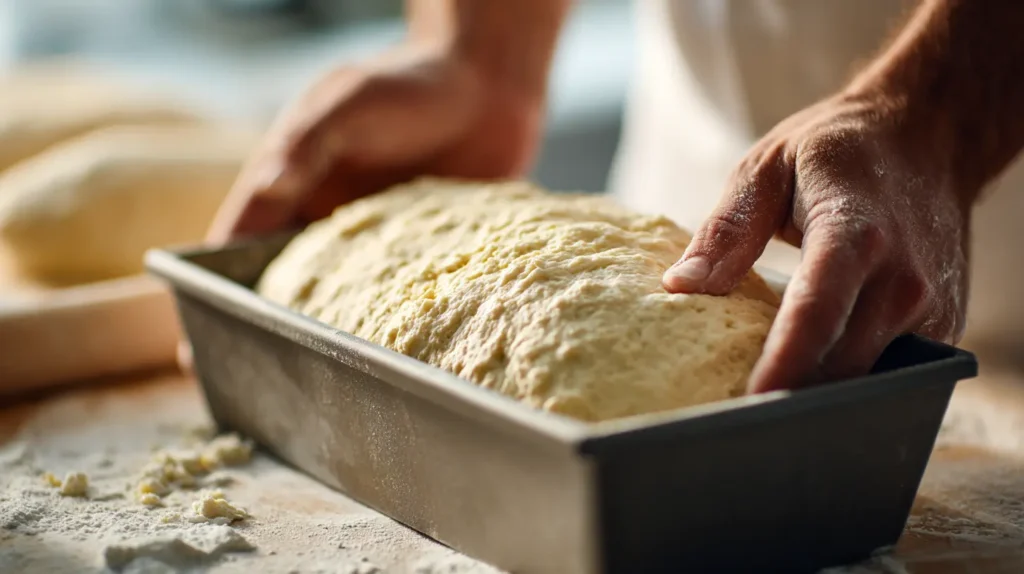
Transfer dough to the prepared loaf pan. Smooth the top with wet hands or a spatula. Cover with oiled plastic wrap and let rise in a warm place (75-80°F) for 45-60 minutes until nearly doubled in size.
💡 Pro Tip: Create the perfect proofing environment by placing dough in the oven with the light on or near a warm appliance—this ensures your gluten free bread recipe rises properly.
Step 5: Bake to Perfection
Preheat oven to 375°F (190°C). Once risen, place the loaf in the center rack and bake for 40-45 minutes until golden brown and internal temperature reaches 205°F (96°C). The loaf should sound hollow when tapped.
👨🍳 Chef Peter’s Note: “Don’t skip the thermometer test in this gluten free bread recipe! This is the most reliable way to know your bread is perfectly baked through without being gummy.”
Step 6: Cool Completely Before Slicing
Remove bread from pan immediately and cool completely on a wire rack for 2-3 hours. This prevents gummy texture and allows the crumb structure to set properly.
💡 Pro Tip: Resist the temptation to slice warm bread! This is the hardest but most important step in this gluten free bread recipe for perfect texture.
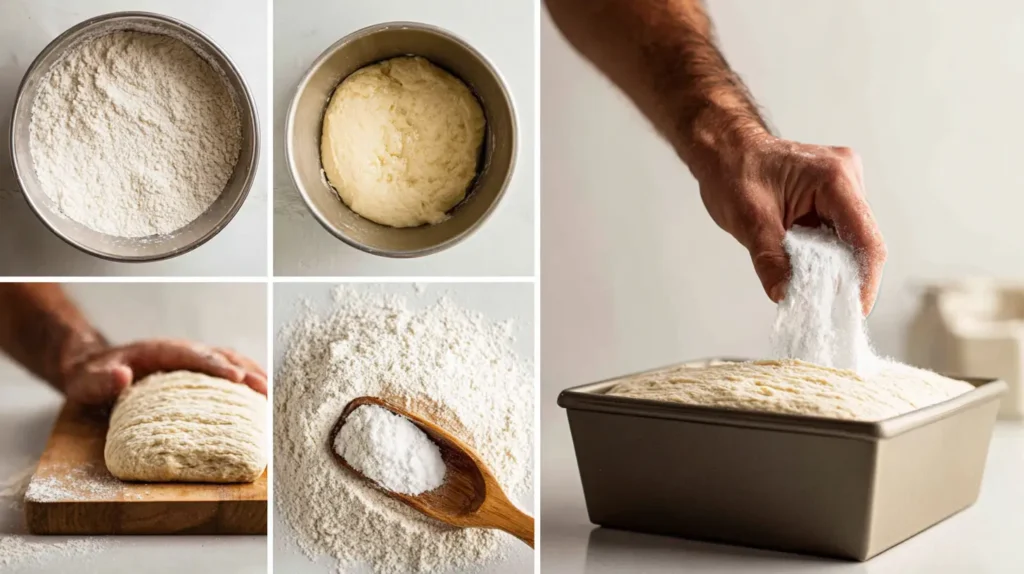
Custom Gluten Free Flour Blends for This Recipe
| Blend Name | Ingredients | Characteristics |
| All-Purpose Basic | 2 cups rice flour, ⅔ cup potato starch, ⅓ cup tapioca starch | Neutral flavor, good for beginners |
| High-Protein Blend | 1½ cups sorghum flour, 1½ cups tapioca starch, ¼ cup almond flour | Nutritious, slightly nutty flavor |
| Nut-Free Blend | 2 cups brown rice flour, 1 cup tapioca starch, 1 cup potato starch | Allergy-friendly, light texture |
| Artisan Bread Blend | 1¾ cups brown rice flour, 1 cup tapioca starch, ¼ cup potato flour | Chewy crust, excellent structure |
Gluten Free Bread Recipe Variations
| Variation | Ingredients to Change | Instructions |
| Dairy-Free Version | Replace butter with olive oil | Use light olive oil or avocado oil |
| Vegan Adaptation | Replace eggs with flax eggs | 3 tbsp ground flax + 9 tbsp water |
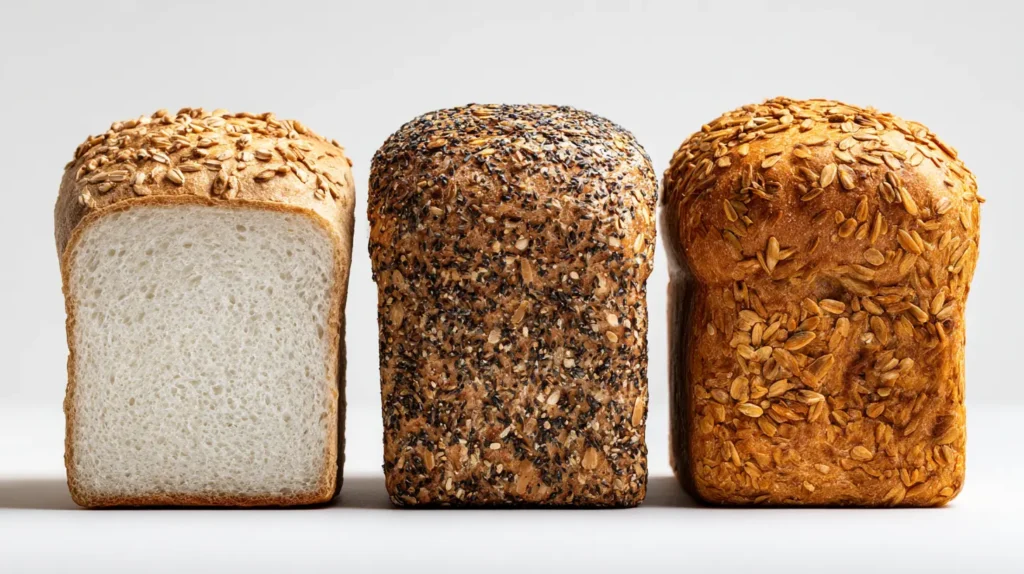
| Seeded Loaf | Add ¼ cup mixed seeds | Sunflower, pumpkin, flax, sesame |
| Herb & Garlic | Add 2 tsp herbs + 1 tsp garlic powder | Italian herbs work beautifully |
| Whole Grain Boost | Replace 1 cup AP flour with sorghum | Adds nutrition and flavor |
| Keto/Low-Carb | Use almond and coconut flour blend | Adjust liquids as needed |
Nutrition Information (per slice)
| Nutrient | Amount | % Daily Value |
| Calories | 120 kcal | 6% |
| Total Fat | 4g | 5% |
| Saturated Fat | 1g | 5% |
| Carbohydrates | 19g | 7% |
| Fiber | 3g | 11% |
| Sugar | 2g | 4% |
| Protein | 4g | 8% |
| Sodium | 210mg | 9% |
| Calcium | 20mg | 2% |
| Iron | 1mg | 6% |
Expert Tips for This Gluten Free Bread Recipe
- Weigh ingredients – Volume measurements vary dramatically in gluten-free baking
- Room temperature ingredients – Cold items can shock yeast and affect rise
- Don’t overproof – Gluten-free bread collapses easily if over-risen
- Use oven thermometer – Accurate temperature is crucial for proper baking
- Wait to slice – Cutting warm bread causes gummy texture
- Fresh ingredients – Especially yeast and flour for optimal results
- Mix thoroughly – Unlike wheat dough, gluten-free benefits from complete mixing
- Proper storage – Keep in airtight container or freeze for freshness
Troubleshooting Common Issues
| Problem | Likely Cause | Solution |
| Dense, heavy loaf | Insufficient rise | Check yeast freshness, ensure proper proofing temperature |
| Gummy texture | Undercooked or cut too soon | Verify internal temp 205°F, cool completely |
| Crumbly slices | Insufficient binding | Increase xanthan gum by ¼ teaspoon |
| Cracked top | Dough too dry | Increase liquid by 1-2 tablespoons |
| No rise | Dead yeast or cold proofing | Test yeast first, ensure warm environment |
| Soggy bottom | Undercooked or over-hydrated | Use light-colored pan, verify oven temp |
| Collapsed loaf | Over-proofed | Reduce proofing time, use less yeast |
| Thick, tough crust | Oven too hot | Reduce temperature, cover with foil |
Storage & Freezing Instructions
Room Temperature: Store completely cooled bread in an airtight container or plastic bag at room temperature for 3-4 days. For longer freshness, place a paper towel in the container to absorb excess moisture.
Refrigeration: While you can refrigerate for up to 1 week, refrigeration may cause faster drying. Only refrigerate if your kitchen is very warm or humid.
Freezing: Slice cooled bread, place parchment between slices, and freeze in airtight container or freezer bags for up to 3 months. Toast frozen slices directly or thaw at room temperature.
Refreshing Stale Bread: Lightly toast slices or warm entire loaf wrapped in foil at 300°F for 10-15 minutes. Sprinkle with water before toasting to revive crust.
Serving Suggestions & Pairings
This versatile bread works beautifully for countless applications from breakfast to dinner:
- Breakfast: French toast, avocado toast, or with eggs
- Lunch: Sandwiches, paninis, or with soups and salads
- Dinner: Garlic bread, breadcrumbs, or stuffing
- Snacks: With hummus, cheese boards, or olive oil dip
- Dessert: Bread pudding or French toast casserole
Recipe Success Checklist
- Yeast activated and foamy (5-10 minutes)
- Dry ingredients thoroughly mixed
- Dough mixed until smooth and sticky (3-4 minutes)
- Proper proofing environment (75-80°F)
- Bread nearly doubled in size before baking
- Internal temperature reached 205°F
- Completely cooled before slicing (2-3 hours)
- Properly stored for maximum freshness
Frequently Asked Questions
What is the trick to making good gluten free bread?
The trick to making good gluten free bread lies in the perfect balance of binders and hydration. Use a combination of psyllium husk and xanthan gum for elasticity, ensure proper hydration since GF flours absorb more liquid, and don’t skip the vinegar or lemon juice which strengthens the starch network. Proper proofing temperature and not overmixing are also crucial for success.
What is the secret to getting gluten free bread to rise?
The secret to getting gluten free bread to rise involves three key factors: using fresh yeast activated in warm (not hot) water, creating a warm proofing environment (75-80°F), and including binders like psyllium husk that help trap the gas bubbles. Unlike wheat bread, gluten-free bread relies on starch gelatinization rather than gluten development for rise.
What is the biggest challenge of making gluten free bread?
The biggest challenge of making gluten free bread is achieving the right texture and structure without gluten. Common issues include dense, gummy crumb, poor rise, and crumbly slices. This recipe solves these problems through precise ingredient ratios, proper hydration, and the combination of psyllium husk with xanthan gum for optimal structure.
Why do you put vinegar in gluten free bread?
Vinegar is added to gluten free bread to strengthen the starch network, improve rise, and create a lighter texture. The acidity helps break down starches, making them more available for yeast fermentation. It also tenderizes the crumb and can help extend the shelf life of your homemade gluten free bread.
What are common mistakes in gluten-free baking?
Common mistakes in gluten-free baking include: using expired yeast, incorrect water temperature, over or under-proofing, inaccurate measuring, using the wrong flour blend, overmixing the batter, and cutting the bread before it’s completely cooled. Each of these can lead to dense, gummy, or collapsed gluten free bread.
What is the best flour for gluten free bread?
The best flour for gluten free bread is a balanced blend containing whole grain flours like brown rice or sorghum combined with starches like tapioca and potato. A good ratio is 40% whole grain flour to 60% starch. Pre-mixed all-purpose gluten-free flours from reputable brands often provide consistent results for beginners.
What is the best gluten free flour for bread?
The best gluten free flour for bread typically contains a mix of brown rice flour, tapioca starch, and potato starch. Many experienced bakers prefer creating custom blends, but for convenience, King Arthur Measure for Measure or Bob’s Red Mill 1-to-1 baking flour work exceptionally well for gluten free bread recipes.
Which gluten free flour is most like regular flour?
Cup4Cup gluten free flour is often considered most like regular flour because it was developed by professional chefs and behaves similarly to wheat flour in recipes. It contains a blend of rice flour, tapioca starch, potato starch, and milk powder that mimics the protein content and texture of all-purpose wheat flour.
What is the trick to baking with gluten free flour?
The trick to baking with gluten free flour is to understand that it behaves differently than wheat flour. Key tips include: increasing hydration, using binders like xanthan gum, mixing longer to develop structure, allowing batters to rest before baking, and using weight measurements rather than volume for accuracy.
What flour do gluten free bakeries use?
Professional gluten free bakeries typically use custom flour blends that may include brown rice flour, sorghum flour, tapioca starch, potato starch, and sometimes bean flours. Many add small amounts of whey protein or milk powder to improve texture. Some commercial blends used by bakeries include Authentic Foods Multi-Blend or Better Batter All-Purpose flour.
What are common mistakes using gluten-free flour?
Common mistakes when using gluten-free flour include: substituting 1:1 without adjusting liquids, not using binders, overmixing or undermixing, using expired flour, and expecting identical results to wheat flour. Gluten-free flours require recipe adaptation and different techniques to achieve optimal results.
What breads are naturally gluten-free?
Naturally gluten-free breads include those made from grains and starches like corn tortillas, rice cakes, socca (chickpea flatbread), arepas (corn cakes), and breads made from certified gluten-free oats, buckwheat, amaranth, quinoa, and teff. However, cross-contamination is a concern, so always verify gluten-free certification.
What bread is naturally gluten-free?
Breads that are naturally gluten-free include cornbread (when made with gluten-free ingredients), flatbreads made from chickpea flour (socca), rice flour breads, and traditional Central American foods like arepas and pupusas made from masa harina. Many ethnic cuisines have traditional gluten-free breads that predate modern wheat cultivation.
Is sourdough bread gluten-free?
Traditional sourdough bread is not gluten-free as it’s made from wheat, rye, or barley flour. However, gluten-free sourdough can be made using gluten-free flours and a gluten-free starter. The fermentation process may break down some gluten, but it’s not sufficient for those with celiac disease unless certified gluten-free ingredients are used.
Does rye bread have gluten?
Yes, rye bread contains gluten. Rye is a gluten-containing grain, though it has less gluten than wheat. People with celiac disease or gluten sensitivity must avoid rye bread unless it’s specifically made with gluten-free rye alternatives and processed in a gluten-free facility.
What is the highest rated gluten-free bread?
The highest rated gluten-free bread among consumers is often Canyon Bakehouse Heritage Style Honey White, praised for its soft texture and good flavor. Schar’s Artisan Baker Multigrain Bread and Against the Grain’s Original Bagettes also receive high ratings for their authentic texture and taste in the gluten-free community.
Why are many doctors against a gluten-free diet?
Many doctors caution against unnecessary gluten-free diets because whole grains containing gluten provide important nutrients, and gluten-free processed foods can be higher in sugar, fat, and calories while being lower in fiber. For people without celiac disease or gluten sensitivity, there’s no proven health benefit to avoiding gluten.
What to replace bread with gluten-free?
To replace bread when eating gluten-free, consider: lettuce wraps, corn tortillas, gluten-free wraps, portobello mushroom buns, sweet potato toast, gluten-free crackers, rice cakes, or homemade gluten-free bread. Many also use gluten-free grains like quinoa, buckwheat, or millet as carbohydrate bases instead of bread.
What is the best yeast for gluten free bread?
The best yeast for gluten free bread is active dry yeast, as it’s reliable and readily available. Instant yeast can also work but may require adjustment to proofing times. Some bakers prefer fresh cake yeast for potentially better flavor development in their gluten free bread recipes.
What is the best gluten-free yeast for bread?
All regular yeast is naturally gluten-free, as yeast is a single-celled organism. However, cross-contamination can occur during processing. For guaranteed gluten-free yeast, look for brands that specifically label their yeast as gluten-free, such as Red Star Active Dry Yeast or Fleischmann’s Yeast, which are certified gluten-free.
What is the secret to making good gluten-free bread?
The secret to making good gluten-free bread involves: using the right flour blend with proper protein-starch balance, incorporating effective binders (psyllium + xanthan gum), proper hydration, accurate proofing temperature, and allowing the bread to cool completely before slicing. Understanding that gluten-free dough behaves differently than wheat dough is fundamental to success.
Why does yeast not work with gluten free flour?
Yeast does work with gluten free flour, but the fermentation process is different. Without gluten to trap gas bubbles, the rise can be less dramatic and the structure more delicate. Issues often arise from improper hydration, wrong proofing temperature, or using old yeast rather than incompatibility with gluten-free flours.
What is the best binder for gluten-free bread?
The best binder for gluten-free bread is a combination of psyllium husk powder and xanthan gum. Psyllium provides moisture retention and elasticity while xanthan gum offers binding strength. Together they create a texture closest to traditional bread. Eggs can supplement but not replace these binders in most gluten free bread recipes.
Can you use yeast with Bob’s Red Mill gluten free flour?
Yes, you can absolutely use yeast with Bob’s Red Mill gluten free flour. Their 1-to-1 Baking Flour is specifically formulated to work with yeast in bread recipes. However, you may need to adjust hydration slightly as different batches of flour can vary in absorption. Always proof your yeast separately to ensure it’s active when using any gluten-free flour.
Final Thoughts on This Gluten Free Bread Recipe
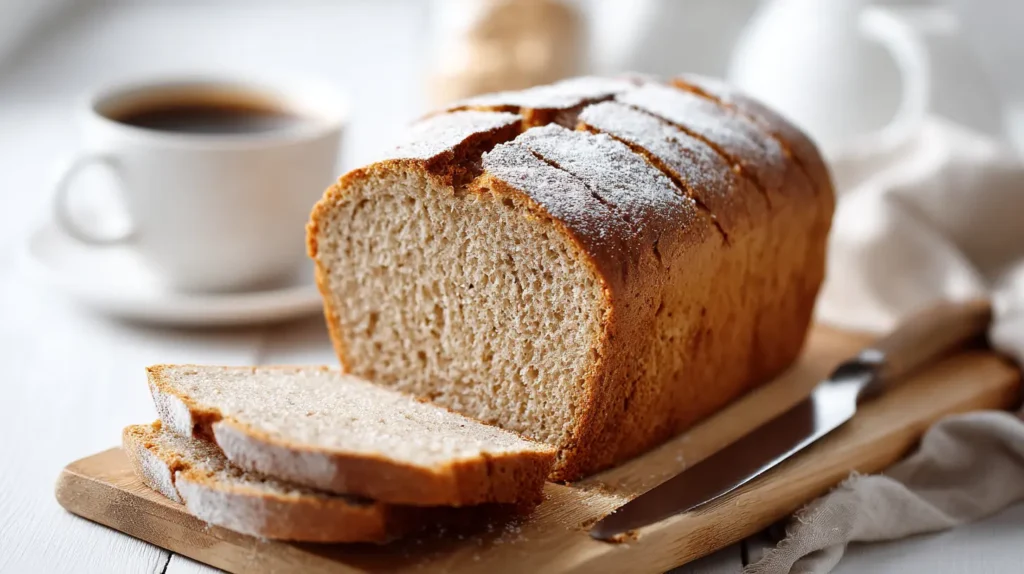
This comprehensive gluten free bread recipe represents years of testing and refinement to create what we believe is the ultimate homemade bread for those avoiding gluten. While gluten-free baking requires some adjustment from traditional methods, the results are incredibly rewarding when you follow this reliable gluten free bread recipe.
Remember that practice makes perfect with gluten-free baking. Don’t be discouraged if your first loaf isn’t perfect—each attempt teaches you more about the unique characteristics of gluten-free flours. This tested gluten free bread recipe is designed to be forgiving and adaptable, making it the perfect starting point for your gluten-free baking journey.
For more gluten-free baking success and other delicious recipes, explore our complete guide collection and discover how to adapt all your favorite recipes to gluten-free versions.
Gluten Free Bread Recipe
This soft, fluffy, homemade gluten free bread delivers a bakery-quality texture without crumbling or becoming gummy. Developed through 50+ test batches by Chef Peter, this recipe uses psyllium husk and xanthan gum to mimic gluten’s elasticity, creating a perfectly risen loaf with golden crust and airy crumb.
- 9×5-inch loaf pan
- stand mixer or hand mixer
- digital kitchen scale
- instant-read thermometer
- mixing bowls
- measuring cups and spoons
- plastic wrap or kitchen towel
- wire cooling rack
- rubber spatula
- 3 cups (360g) gluten-free all-purpose flour
- 2 tbsp (18g) psyllium husk powder
- 1 tsp (3g) xanthan gum
- 1 tbsp (9g) active dry yeast
- 2 tbsp (25g) granulated sugar
- 1.5 tsp (9g) fine sea salt
- 3 large eggs (room temperature)
- 1.75 cups (415ml) warm water (110°F)
- 0.25 cup (60ml) olive oil
- 1 tbsp (15ml) apple cider vinegar
Grease a 9×5 inch loaf pan. In a small bowl, mix warm water, sugar, and yeast. Let sit 5–10 minutes until foamy.

In a mixer bowl, whisk together flour, psyllium husk, xanthan gum, and salt until evenly combined.
Add eggs, olive oil, apple cider vinegar, and activated yeast mixture. Mix 3–4 minutes until smooth and sticky.
Transfer dough to loaf pan, smooth top, cover, and rise 45–60 minutes until nearly doubled.
Bake at 375°F (190°C) for 40–45 minutes until golden and internal temperature reaches 205°F.
Remove bread from pan and cool 2–3 hours on a wire rack before slicing.
For best results, always weigh your ingredients. Use a warm proofing environment (75–80°F) and avoid slicing until the bread is fully cooled to prevent gumminess. This recipe adapts easily for dairy-free or vegan baking by using oil instead of butter and flax eggs in place of eggs.
Last Updated: November 23, 2025 | This tested and perfected gluten free bread recipe guarantees professional results for home bakers seeking soft, delicious gluten-free bread.





1 thought on “Gluten Free Bread Recipe”